Tree Removal and Storm Response in Smyrna, TN

Twenty years of removals, pruning, stump grinding and emergency work across Rutherford County and the counties around it.

Smyrna Tree Removal has spent more than twenty years on tree removal, stump grinding, tree trimming, land clearing and emergency storm work in Smyrna, TN and the towns around it. We take down hazardous trees, prune to the objectives and cut types the ANSI A300 standard defines, grind stumps, clear lots ahead of a builder’s pad, and answer the calls that come in while a storm is still moving through. Every job opens with a free estimate and a written scope that says exactly what leaves the property.

The reason a tree company’s answers change from one address to the next here is that this service area crosses six counties and fifteen cities, and the rules move at the line. The permit question, the disposal price, the licensing threshold and the utility right-of-way are four separate answers, and each one depends on which side of a boundary the tree happens to stand on. We read the ordinance for the city the tree is actually in before we put a number on it, rather than carrying one answer across the whole map.

Two of those surprises land on homeowners more than the rest. The Town of Smyrna does not collect brush a contractor cut, so haul-away is priced into the work instead of left at the curb to argue about later. And before any work near a conductor we establish which of four electric utilities serves the address, because Middle Tennessee Electric, Nashville Electric Service, Cumberland Electric Membership Corporation and Gallatin Department of Electricity do not publish the same clearances or the same rules about dropping a line.

Get Your Free Quote

Fast response • No obligation

So we can reach you about your request.

So we can send you a confirmation after you submit this inquiry form.

  • 20+ Years in Middle Tennessee
  • Free Written Estimates
  • ANSI A300 Pruning, No Topping

What we do

Our Services

Tree removal and arborist work for Smyrna, Tennessee

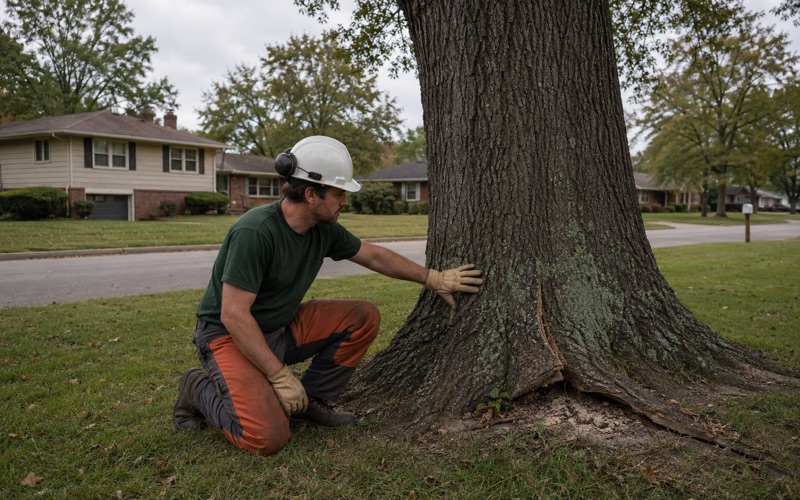
Worker reading the root flare of a mature post oak on a Smyrna lawn where the turf has lifted at the plate.

Arborist

Tree risk assessment, health diagnosis and written condition reports for homeowners, HOAs and insurers across Smyrna and the towns around it.

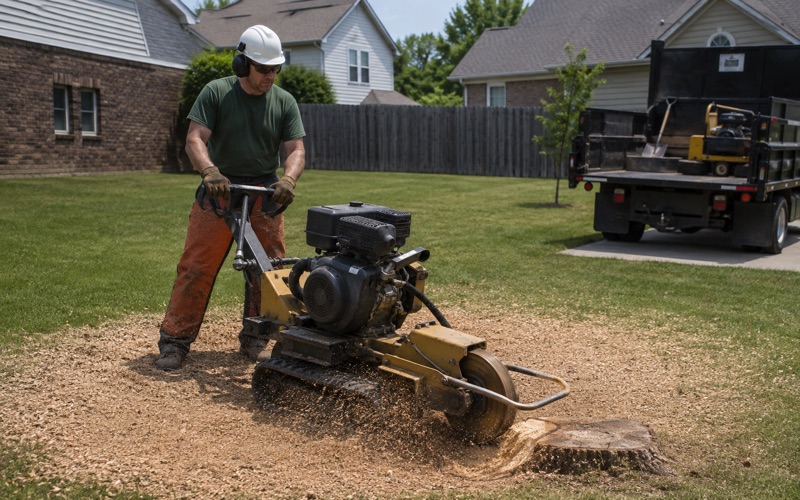
Worker sweeping a stump grinder across the face of an eastern red cedar stump in a Smyrna back yard.

Stump Grinding

Stump grinding and full stump removal for Smyrna, TN yards, fence lines and builder lots, priced against the rock and chert under your soil.

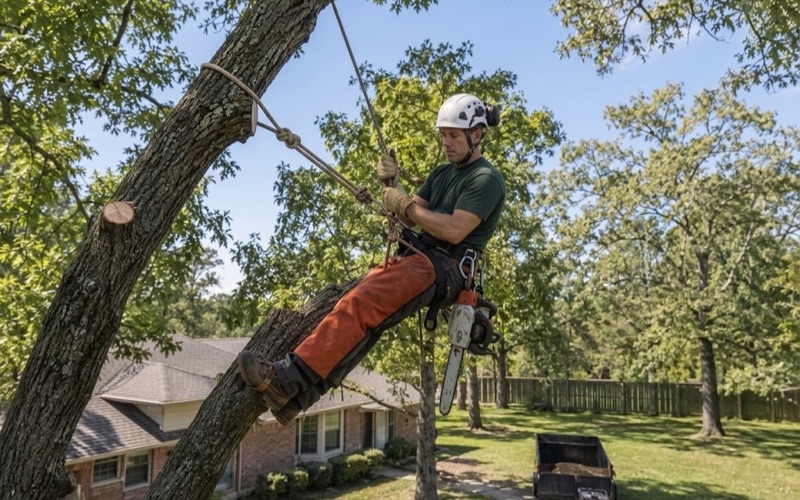
Climber on his line in a chinkapin oak crown over a Smyrna yard, tied in above the limb he is working.

Tree Trimming

Crown cleaning, raising, reduction and thinning worked to ANSI A300 objectives for Smyrna, TN yards, with no topping on any tree.

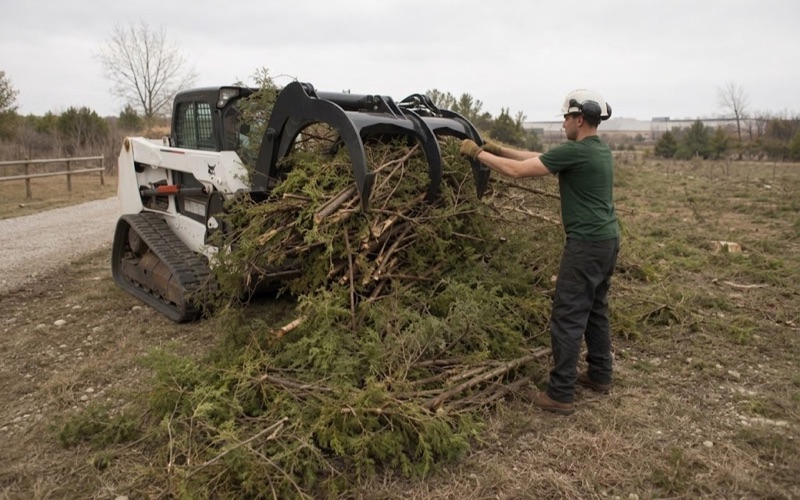
Worker guiding the grapple arm as it lays eastern red cedar stems onto a windrow at the edge of a Smyrna lot.

Land Clearing

Lot clearing, forestry mulching, underbrush removal and builder site prep across Smyrna, TN and the counties this service area crosses.

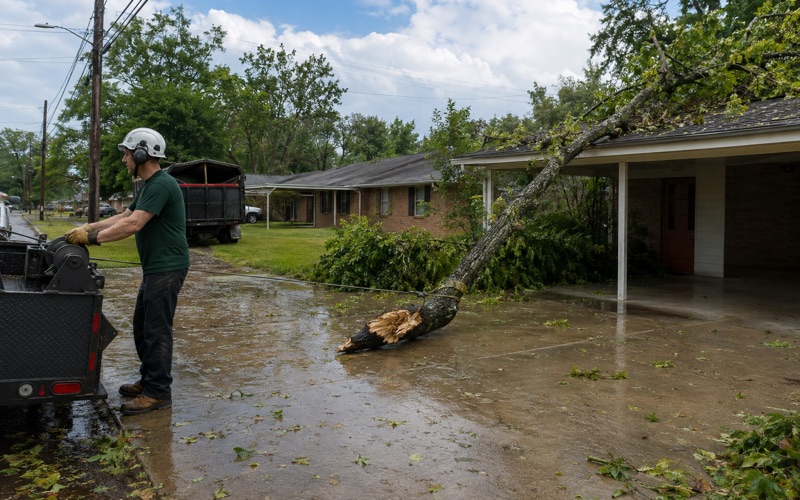
Worker at the winch drum drawing a storm-broken chinkapin oak leader off a Smyrna carport roof.

Emergency Tree Removal

Storm damage response and emergency tree removal for Smyrna, TN: trees on structures, lines and vehicles, documented for the adjuster.

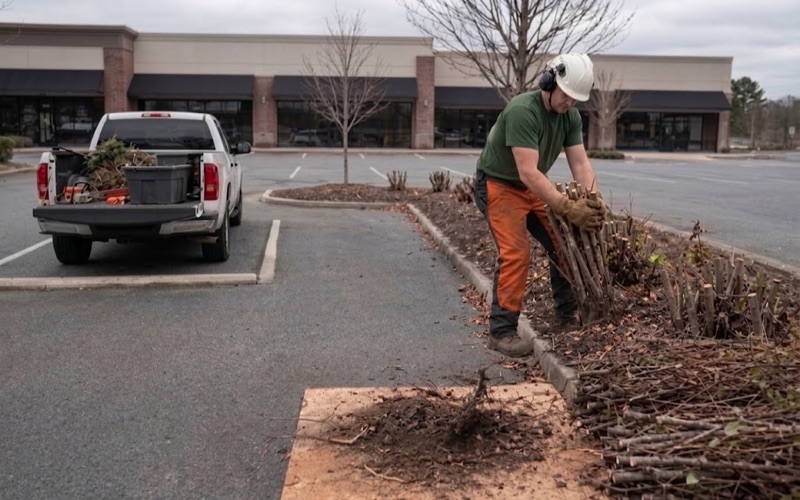
Worker pulling out a hedge stem cluster at a Smyrna storefront frontage after the top has been taken off.

Shrub Removal

Shrub, hedge and brush removal for Smyrna, TN properties, including the overgrown fence lines and privet a mower stopped touching years ago.

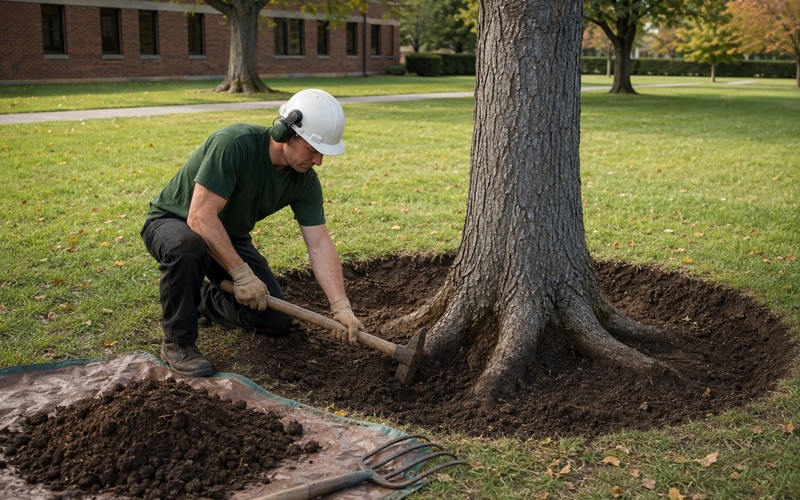
Worker opening the soil at the root collar of a blue ash on Smyrna institutional grounds.

Tree Disease Treatment

Diagnosis and plant health care for declining trees in Smyrna, TN: decay, borers, root collar failure and compacted soil.

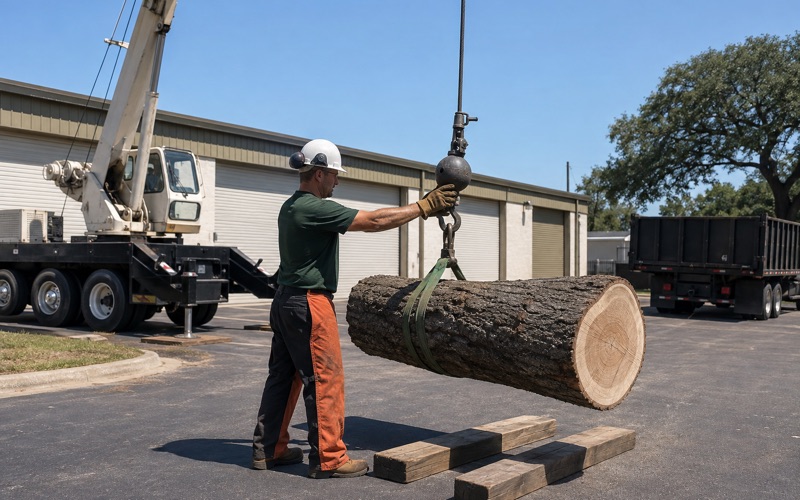
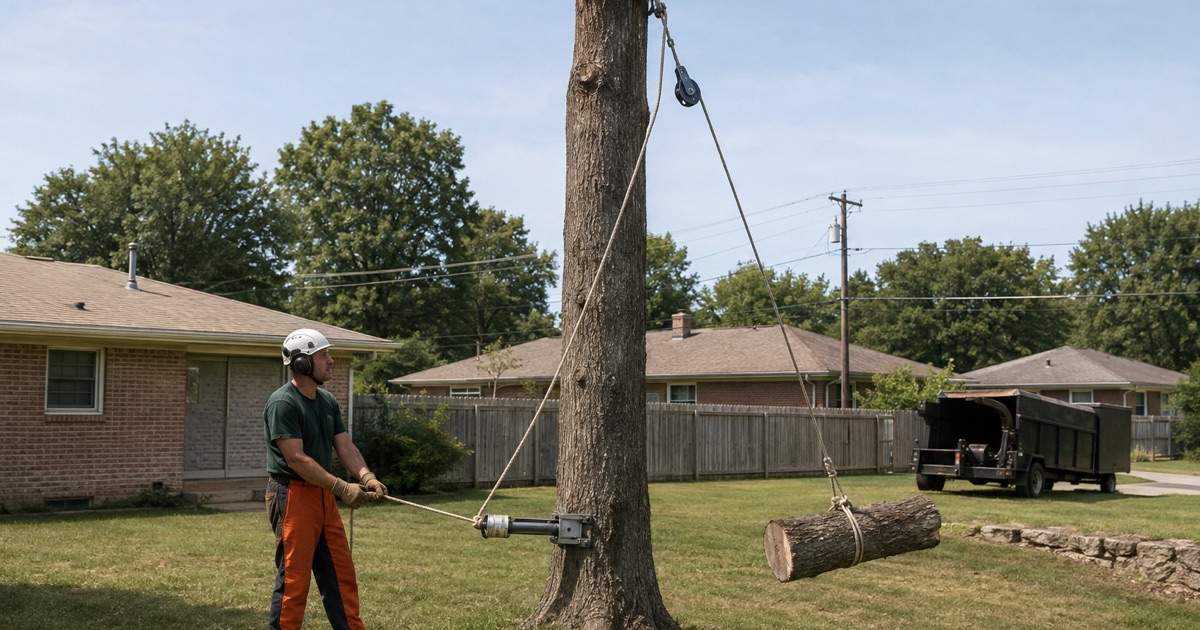
Worker steadying the crane hook block as a post oak section is taken off a tight Smyrna commercial lot.

Crane Assisted Tree Removal

Crane assisted tree removal for Smyrna, TN, where a mature tree stands too close to a house, a pool or a fence to be dismantled by rope alone.

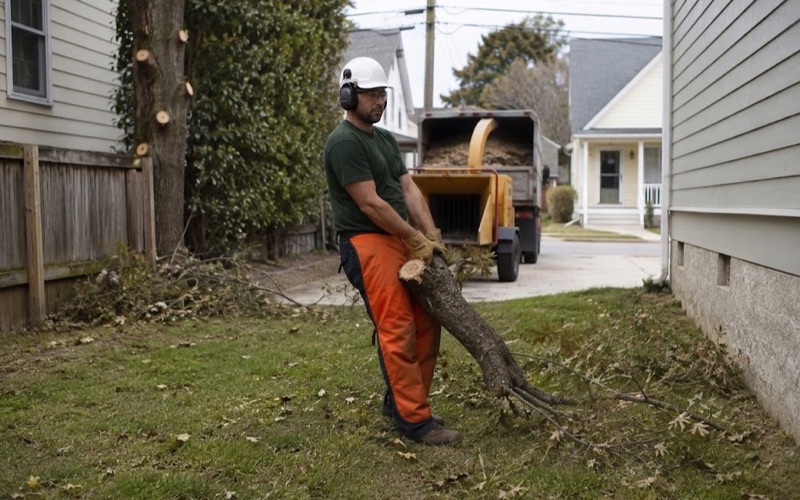
Worker carrying a lowered limb butt to the chipper after an overhanging limb was cut back to a Smyrna property line.

Tree Removal Permit

Where a tree removal permit is required across this service area, and what Tennessee law says about a neighbor's tree hanging over your yard.

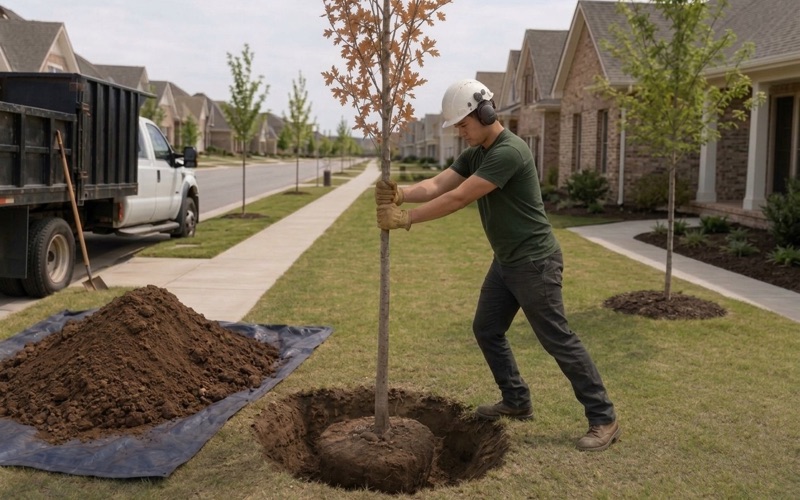
Worker steadying a young chinkapin oak by its stem as it is set into a planting hole on a new Smyrna lot.

Tree Planting

Tree planting and transplanting for Smyrna, TN, with species chosen for shallow limestone soils rather than whatever the nursery had in stock.

What Two Decades in the Nashville Basin Buys You

Ground worker holding three wraps on the bollard while a post oak stem section comes down into a Smyrna back yard.

Twenty Years of Tree Work in Middle Tennessee

We have worked trees in this region for more than twenty years, across the cedar glades of the Inner Nashville Basin, the deeper uplands of the Outer Basin, and the escarpment on the Sumner County side. That span covers several ice events, the shallow-soil windthrow that follows a saturated winter, and enough subdivision back yards to know which gates a tracked machine fits through and which ones need a crane on the street.

Free Estimates and Inclusions in Writing

Estimates are free and they are written, and the inclusions are named individually: the trunk rounds, the stump, the grindings and the chips. A verbal quote that covers “cleanup” is where most tree-work disputes start, because the homeowner heard the stump and the contractor meant the branches. Naming each item removes the argument before the saw comes off the truck.

Why Choose Smyrna Tree Removal

Ordinance Read Before the Quote

Every quote is written after we have checked the ordinance for the city the tree stands in, because six counties and fifteen cities do not answer the permit question the same way, so a homeowner in Franklin is not quoted against the Smyrna rule and a Thompson’s Station lot is not treated as if it were unregulated, rather than a contractor assuming his home city’s answer travels.

Airport Overlay Checked First

No tree near the airfield gets quoted before we establish whether it sits inside an airport height zone, because Smyrna’s zoning ordinance carries a Smyrna/Rutherford County Airport Height Zoning Ordinance at Article X with its own zones, height limits and permits, so a tree that is a regulated obstruction is identified at the estimate rather than discovered mid-job by somebody who never looked.

Utility Confirmed Before Line Work

Never do we put a climber near a conductor without first confirming which of four utilities serves the address, because Middle Tennessee Electric publishes a 40-foot right of way with 20 feet on each side of the line while other providers set their own clearances and their own service-line rules, so the correct outage or drop is arranged in advance rather than improvised from the bucket.

Compact Tracked Access for Subdivision Yards

Every back-yard job is measured at the gate first, and compact tracked equipment goes where it fits, so a mid-sized tree behind a fence stays a straightforward removal instead of being escalated into a crane job with a street closure, and the lawn takes track pressure spread across a wide footprint rather than the ruts a wheeled machine leaves.

Crane and Rigging for Mature Canopy

Where the canopy genuinely is too large or too close to the house, we bring crane and rigging capacity to it: a friction lowering device, a rigging block and bull rope sized against a known working load limit, so a limb over a roofline is lifted clear rather than dropped and hoped for, which is what mature trees on the older lots around the hub actually require.

A Straight Answer on Whether to Remove

We will tell you when a tree can be cabled, braced or pruned instead of removed, and we do not top trees under any circumstances. A company paid by the removal has an obvious reason to find one, so the written assessment separates what we observed from what we recommend and prices both routes, rather than presenting the most expensive option as the only one.

Emergency and Storm Tree Work

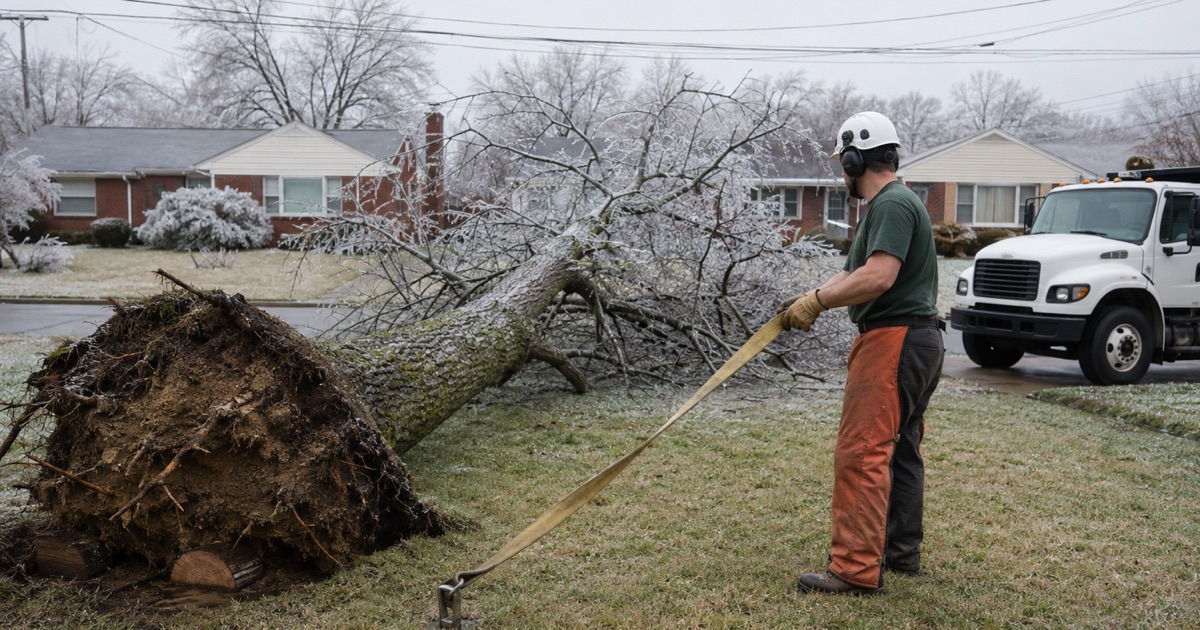
Worker setting a choker strap at the butt end of an ice-thrown chinkapin oak in a Smyrna front yard.

Tree Through the Roof After Straight-Line Wind

A trunk resting on a house is a structural load that is still moving, and cutting it in the wrong order drops the rest of the tree through the ceiling. We rig the stem in controlled sections off the roofline, tarp what is open, and document the failure while the evidence is still in place for the adjuster.

Ice Load, Glazed Limbs and What Breaks First

Ice loading is a documented structural agent in this ecoregion rather than regional color, and the January 2026 storm put 0.3 inches of freezing rain on Rutherford County alongside 2.1 inches of snow. Glazed limbs fail at unions before they fail mid-span, so co-dominant stems and included bark are the first thing we look at after a freeze.

Tree on a Power Line and Which Utility Owns It

A tree across a line is a utility call before it is a tree call, and the right number depends on the address. Middle Tennessee Electric, Nashville Electric Service, Cumberland Electric Membership Corporation and Gallatin Department of Electricity each maintain their own right-of-way and their own policy on service drops, so we identify the provider first and work behind their clearance.

Tree on a Car and Why That Is an Auto Claim

A tree that lands on a vehicle is claimed under the comprehensive coverage on the auto policy, not under the homeowners policy, which is the single most common misunderstanding after a storm. We photograph the vehicle in place, lift the stem clear without dragging it across the panels, and give you the written account of what fell and why.

Tornado and Derecho Damage Across Middle Tennessee

Straight-line wind and tornado tracks leave a different failure pattern than ice: whole trees turned out of the ground rather than limbs shed. On shallow limestone soils the root plate is wide and thin, so a saturated winter windstorm uproots trees that would have snapped elsewhere, and clearing them safely means treating every leaning stem as loaded.

Why a Crew Cannot Work Near Live Lines in Ice or Wind

The ANSI Z133 safety requirements govern minimum approach distance to energized conductors, and no working rule in this trade is stretched more often after a storm. In active ice or high wind a limb releases without warning, so we hold work near a line until the utility de-energizes or the weather turns, rather than putting a climber under a loaded crown.

What a Tennessee Homeowners Policy Covers After a Tree Falls

Coverage generally follows damage to an insured structure, and debris removal usually rides on that same damage rather than standing alone, which is why a healthy tree that falls into an open yard is often the owner’s expense. We tell you before you call the carrier which side of that line the job sits on, so a claim is filed on facts rather than hope.

Getting the Service Line Dropped Before a Crew Climbs

The line running from the pole to the weather head belongs to the customer’s side of the meter in most policies, and utilities differ sharply on whether they will drop it, and whether they charge. We arrange that disconnect ahead of the work date, because a crew standing down while somebody schedules an outage is billable time that bought nothing.

Storm Debris Removal Once the Tree Is Already Down

Plenty of storm calls are cleanup rather than rescue: the tree is on the ground, nobody is in danger, and the yard is unusable. We cut to length, chip what will chip, load the rounds and haul it to the gate that serves the county, and we leave you a receipt itemized for the insurer whether or not the claim ends up being worth filing.

Tree Removal, Permits and Property Lines

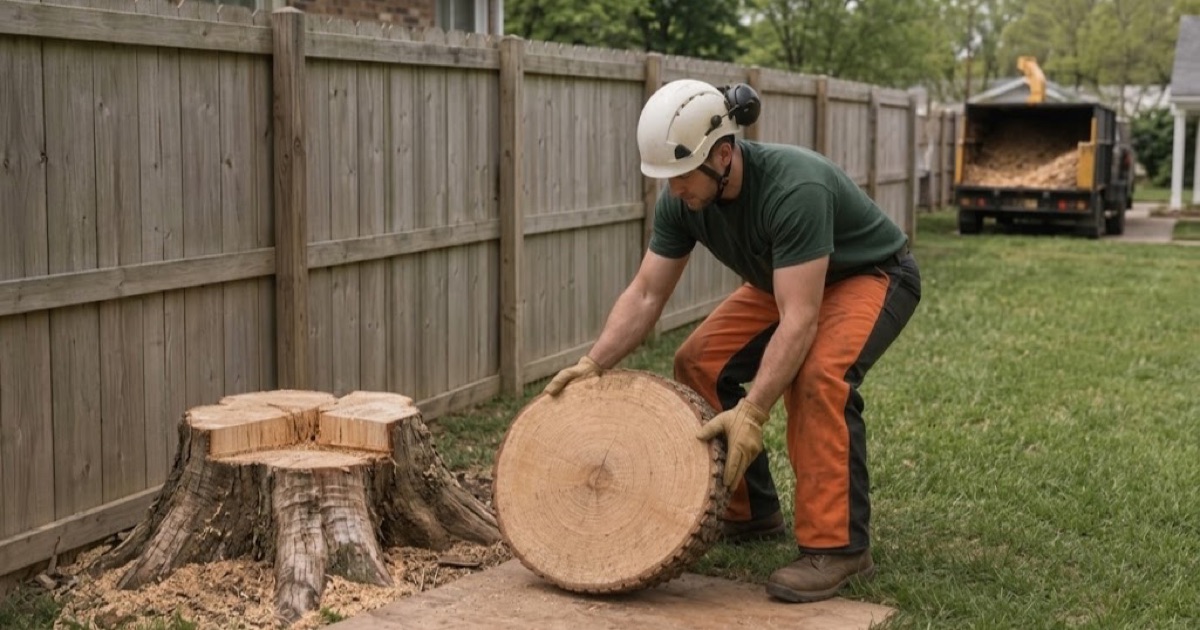
Worker tipping a winged elm round over onto plywood beside a shared Smyrna property line, the fresh stump at the fence behind him.

Whether Smyrna Requires a Permit for Your Own Tree

It does not. The town’s zoning ordinance contains no tree preservation article, no removal article and no permit section, and section 3.150 confines the landscape rules to new site development and changes of use. That is a documented absence rather than a silence, because the same ordinance regulates trees in six pages of detail and still asks for no removal permit.

Fifteen Cities That Answer the Permit Question Differently

The answer changes at the city line and sometimes at the county line. Franklin ties removal to an approved plan or grading permit, Thompson’s Station requires a tree removal permit before any disturbance with exemptions for small or unhealthy stems, and Oak Hill and Forest Hills operate their own per-tree rules. We look up the one that governs your address instead of generalizing.

Trees Inside an Airport Height Zone

An airport overlay regulates a tree as an obstruction, which is a different question from whether the town regulates removal. Smyrna’s ordinance carries the Smyrna/Rutherford County Airport Height Zoning Ordinance at Article X, with airport zones, height limitations, use restrictions, permits and penalties, and La Vergne sits under overlapping height zones of its own on the Nashville side.

Whether a Tree Service Must Be Licensed in Tennessee

Tennessee licenses no tree-care or arborist trade and requires no license to cut trees for money. The Home Improvement Contractor license reaches residential work between 3,000 and 24,999 dollars in the counties that adopted it, Rutherford and Davidson among them, with 10,000 dollars in financial responsibility posted, and the statutory definition of home improvement expressly includes landscaping.

Your Neighbor’s Tree Hanging Over Your Yard

Tennessee follows what the courts call the Hawaii Rule, so overhang by itself is not a legal wrong. Branches and roots crossing the line may be cut back, and the tree becomes something more than an inconvenience only when it causes actual harm or poses an imminent danger of it. We work the practical side of that within the standard.

Cutting Back to the Property Line at Your Own Cost

Self-help under that rule stops at the boundary and it is paid for by the person doing the cutting, not by the tree’s owner. Cuts made at the line still have to be proper cuts, because a hacked face on the neighbor’s tree invites a damages argument you did not need, so we prune to A300 cut placement even when the line is doing the deciding.

When a Neighbor’s Tree Becomes an Actual Nuisance

Shade, dropped leaves, flowers and fruit are treated as natural conditions with no particular owner and do not make a tree a nuisance in Tennessee. Actual harm or imminent danger of actual harm is the threshold, and demonstrating it takes documented defects rather than annoyance, which is what a written condition report is for when a conversation over the fence has stopped working.

The Duty a Tennessee Landowner Has to Inspect

A landowner is expected to know the condition of trees that could reach a road or a neighbor, and that expectation is what converts a failure into a negligence question after the fact. Periodic inspection is cheap next to that exposure, so we walk properties on request and record what we find, dated, whether or not any work follows from it.

Putting a Neighbor on Notice About a Hazardous Tree

Written notice changes what the tree’s owner is presumed to have known, which is the entire point of sending it. A dated report describing the defect, the target and the risk, delivered so that receipt can be shown, moves the question from opinion to record. We supply the report; the delivery and any legal advice belong with your attorney.

An Arborist Report an HOA Committee Will Accept

An architectural review committee is deciding on paper, usually without visiting the tree, so the document has to stand alone. Ours names the species, the diameter at breast height, the observed defects, the targets beneath the crown and the recommended action, separated so the committee can see what was measured against what was advised, and can attach it to their minutes.
Trimming, Pruning and Tree Health

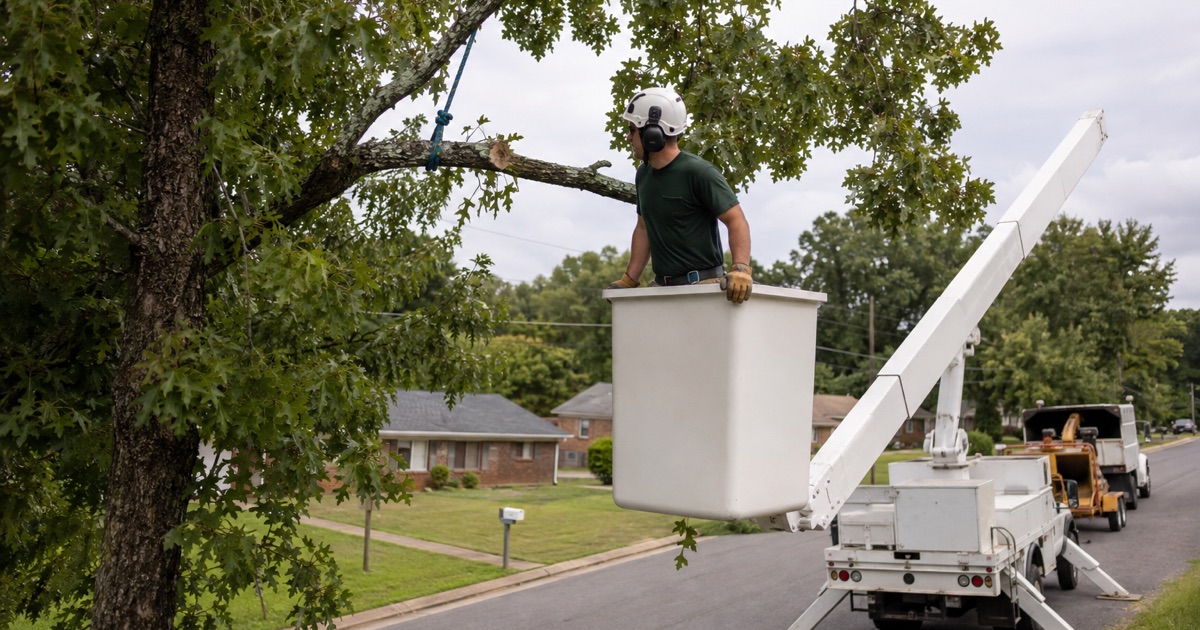
Worker leaning on the bucket rail to read the branch collar of a chinkapin oak limb over a Smyrna street verge.

Crown Cleaning, Raising, Reduction and Thinning

Those four are distinct operations with distinct objectives under ANSI A300, and quoting “a trim” hides which one you are buying. Crown cleaning takes out dead, diseased and broken wood; crown raising lifts the lower limbs for clearance; crown reduction shortens leaders back to suitable laterals; crown thinning opens the canopy without stripping it. We name the objective on the estimate.

Why Topping Is Not a Service We Sell

Topping cuts limbs back to stubs with no lateral to take over, and the tree answers with weakly attached shoots that fail in the next ice load. Smyrna’s own landscape regulations name it and rule it out as maintenance, defining it as cutting limbs to stubs larger than three inches within the crown to the point of removing the normal canopy. Reduction is the legitimate alternative.

Cabling and Bracing Instead of Removal

Co-dominant stems with included bark split at the union, and that is a supportable defect rather than an automatic removal. A dynamic cabling system or extra high strength cable set at the correct height, or a brace rod through the union where the split has begun, keeps a good tree standing. We inspect the hardware on a schedule, because installed and forgotten is the failure mode.

Emerald Ash Borer and Why Dead Ash Turns Brittle

Ash killed by emerald ash borer loses limb wood strength quickly and stops being safe to climb, which is why a dead ash gets a crane or a lift rather than a rope and saddle. Tennessee repealed its emerald ash borer quarantine in 2021, so nothing restricts what happens to the wood within the state, but the structural clock on a standing dead ash keeps running.

Mushrooms and Conks at the Root Flare

A conk on the buttress is fruiting from decay that is already inside the tree, and by the time it shows the loss of sound wood is usually well advanced. We excavate around the root flare to see the extent, sound the base, and quantify what remains rather than guessing from the outside, because a decayed root plate on shallow soil is exactly the failure that arrives in a wet winter.

A Lean Past Fifteen Degrees and Other Thresholds

A lean of more than fifteen degrees from vertical is one of the practical thresholds that moves a tree from monitor to act, particularly when the soil on the high side has cracked or heaved. It is a starting point rather than a verdict, so we read it alongside root plate movement, crown condition and what stands within striking distance before recommending anything.

Root Collar Excavation, Air Spade and Soil Decompaction

A root flare buried by fill or mulch stays wet and rots, and the tree declines from the base while the crown gets blamed. An air spade opens the collar without severing roots, and the same tool handles soil decompaction and radial trenching where construction traffic has closed the pore space. Both are cheaper than the removal they prevent.

Spotted Lanternfly, Honeydew and Sooty Mold

As of the state forestry map current to June 2026, spotted lanternfly populations were confirmed in six Tennessee counties including Davidson, Wilson and Sumner, and Rutherford was not among them, though two of those adjoin it. The state’s position is that the insect stresses trees rather than killing them directly; the honeydew and sooty mold are what homeowners notice first.

Bradford Pear Splitting in a Subdivision Yard

Callery pear was planted through these subdivisions in quantity and it fails on schedule, because the branch unions are crowded, steeply angled and full of included bark. A mature specimen usually loses a third of itself in one event. We can reduce and cable a young one, but on a split trunk over a driveway removal is the honest recommendation.

Leyland Cypress Planted Too Close and Dying Back

Leyland cypress goes in as a fast screen at spacing that suits a five-foot plant, and a decade later the interiors are shaded out, the tops are browning and the row is bare where the neighbors meet. Thinning does not bring interior foliage back on this species, so the useful conversation is staged replacement rather than an annual shearing bill.

Stumps, Debris and Land Clearing

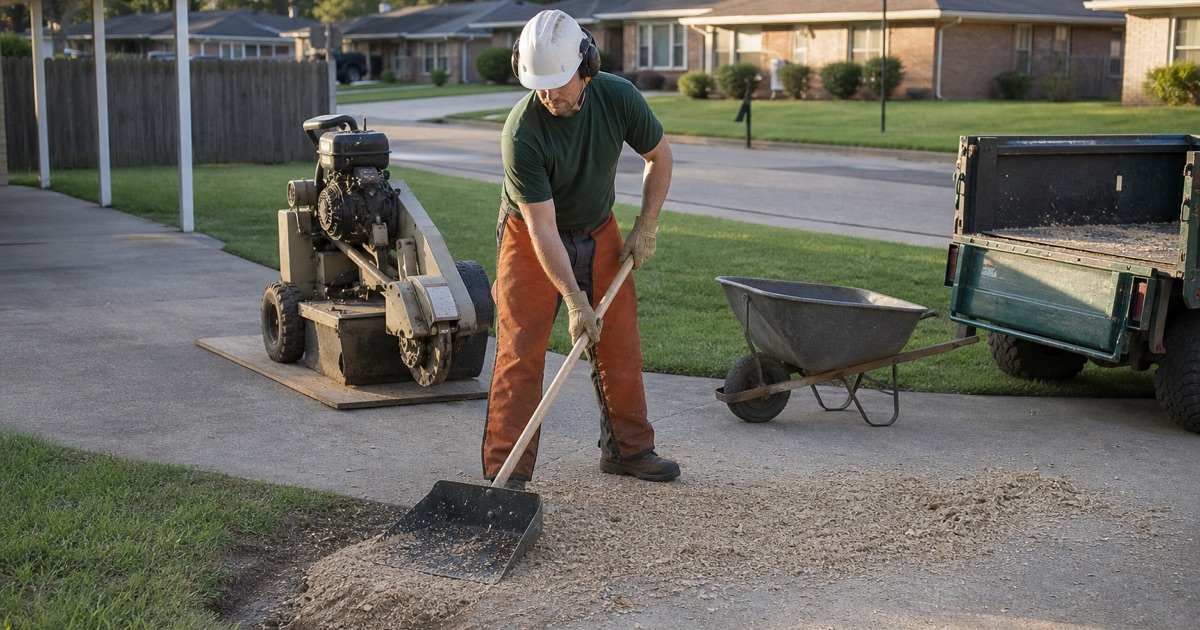
Worker scooping ground stump chips off a Smyrna driveway apron into a barrow after the grinder has finished.

Grinding a Stump Against Pulling It Whole

Grinding leaves the root plate in the ground and turns the visible stump into chips, which is right for a lawn, a fence line or a patio. Pulling a stump whole takes an excavator, a much larger hole and a disposal problem, and it is only worth it where footings or utilities need the volume clear. We quote whichever the finished use actually requires.

How Deep a Grinder Reaches Before the Rock Stops It

A tracked stump grinder rated to cut 12 to 16 inches below grade will find limestone before it finds the bottom of the root plate on much of this ground. The Barfield series runs 8 to 20 inches to bedrock and the Gladeville series about 3 to 12, so grind depth here is set by rock rather than by the machine and cannot be promised sight unseen.

Chert Volume, Not Depth to Rock, Is What Dulls a Wheel

Those are two different failure modes and pricing them as one is how a stump job goes wrong. Shallow soil stops the wheel early; a deep soil carrying heavy chert fragments lets the wheel run and eats teeth the whole way down. On the Highland Rim side of this service area the second one dominates, and we say which we expect on your lot.

The Grindings, and Who Levels and Seeds the Crater

A ground stump produces a mound of chips and soil roughly twice the volume of the hole, and what happens to it is a decision, not an assumption. We can leave the grindings mounded to settle, haul them off and backfill with topsoil, or level and seed the patch. The estimate says which one you are buying before the machine arrives.

Trunk Rounds, Firewood and the Credit for Leaving Wood

Rounds are heavy, and hauling them is a real share of the cost on a large removal. If you burn or split, leaving the wood stacked on site reduces the price, and we will say by how much rather than treating it as a favor. If you do not want it, it leaves with us and the disposal is priced against the county gate.

Why a Contractor Cannot Use City Brush Collection

Municipal brush programs across this area exist for homeowner-cut material and exclude anything a paid crew cut. The Town of Smyrna will not take contractor yard waste, Goodlettsville’s rule excludes work done for profit or personal gain in terms, and Hendersonville states plainly that a hired tree service must haul its own debris. So we do.

Tipping by the Ton Against by the Cubic Yard

The gates in this service area do not use the same unit, and that alone changes a disposal line. Williamson County takes brush at 40 dollars per ton and Sumner County at 45 dollars per ton, while Wilson County prices by volume at 18 dollars per cubic yard for construction and demolition waste and 5 dollars per cubic yard for small residential yard waste.

Lot Clearing and Builder Site Prep Before the Pad

A forestry mulcher handles understory and small stems in place and leaves a mat that holds soil on a cleared slope, while anything of size comes out whole. We work to the marked limits of disturbance, keep the material out of the drainage the plan protects, and coordinate around whatever grading or land disturbance permit the jurisdiction issued.

Tree Protection Fencing on a Lot Still Being Built

The trees a plan requires to be saved are lost to compaction and root severance far more often than to a saw. Fencing at the tree protection zone, set before the first machine arrives and kept standing, is the only part of that plan that works, and Smyrna’s own landscape section gives preserved trees real credit against required plantings once construction is done.

Areas We Serve

Smyrna Tree Removal provides tree-removal throughout the greater Smyrna area, with the same crews and the same standards on every job.

Good to know

Frequently Asked Questions

What drives the price of a tree removal in Smyrna?

Four things set the number: the size and species of the tree, what stands underneath it, how a chipper and truck reach the drop zone, and where the debris has to go. A back-yard silver maple over a pool deck is rigged down piece by piece and costs several times what the same tree costs in an open front yard. We price the disposal against the gate that actually serves the county the job is in, rather than carrying one flat figure across six of them.

Do I need a permit to take down a tree on my own lot in Smyrna?

No. The Town of Smyrna's zoning ordinance has no tree removal article, no permit section and no diameter threshold for an existing tree on private property, and section 3.150 confines the landscape rules to new site development and changes of use. That answer is specific to the town limits. Cross into Franklin, Thompson's Station, Oak Hill or Forest Hills and a permit does exist, which is why we check the address before we quote.

Will you top a tree if I ask you to?

No, and Smyrna's own ordinance is on the same side of that question. Section 3.150(H) names topping directly and defines it as cutting limbs back to stubs larger than three inches within the crown to the point of removing the normal canopy, and it is not accepted maintenance on a required tree. Topping forces weakly attached regrowth that fails in the next ice event, so we quote crown reduction, cabling or removal instead.

Who hauls the brush away after the crew leaves?

We do, on every job. The Town of Smyrna does not collect yard waste generated by a contractor, so brush left at the curb after a hired crew simply stays there, and neighboring cities such as Goodlettsville and Hendersonville publish the same refusal in plain terms. Haul-away is written into the estimate along with the trunk rounds, the stump, the grindings and the chips, so nothing about disposal is left to be argued after the fact.

Does homeowners insurance pay for tree removal?

Usually only when the tree hit something covered. A standard Tennessee policy responds when a tree damages a dwelling or another insured structure, and debris removal generally follows that damage rather than standing on its own, so a healthy tree that falls in an open yard is often the owner's cost. We tell you which side of that line a job sits on before you file, and we write the condition report an adjuster will ask for.

How deep can you grind a stump here?

Deep enough for grass or a patio in most yards, but the soil decides, not the machine. A grinder rated to cut 12 to 16 inches below grade will hit limestone before it finds the bottom of the root plate on a Barfield soil at 8 to 20 inches to rock, or a Gladeville soil at 3 to 12 inches. We quote what the machine can reach on your lot and say so plainly rather than promising a depth sight unseen.

How fast can you get to an emergency call?

Storm calls are triaged by what the tree is resting on. A trunk through a roof, a limb holding a service line down or a tree blocking the only way off a property is handled ahead of a tree lying flat in a back yard, and we say honestly where you sit in the queue instead of promising everyone the same hour. In a widespread ice event that order is set by hazard, not by who called first.

Is a tree service required to hold a license in Tennessee?

Tennessee issues no arborist or tree-care license and requires none to cut trees for money, which surprises most homeowners. A Home Improvement Contractor license does apply to residential work between 3,000 and 24,999 dollars in the counties that adopted the statute, Rutherford and Davidson among them, and the definition reaches landscaping. Ask any company for proof of insurance in writing, and check which counties their credentials actually cover.

Can a tree be saved instead of removed?

Often, and we will say so when it is true. Co-dominant stems with included bark can be supported with cabling and bracing, a root flare buried by grade change can be opened with an air spade, and a thinning crown over compacted soil frequently responds to decompaction rather than a saw. A written assessment tells you which of those a tree is a candidate for and what it costs against removal.

What does a written tree condition report include?

It records the species, the diameter at breast height, the defects we found and where, the targets underneath the tree, and a plain statement of the risk and the options. That is the document a neighbor, an insurer or an HOA architectural review committee will actually accept, because it separates what was observed from what was recommended. We write one on request, and it stands on its own without the removal.

Ready to Get Started?

Request a free quote today and we'll get back to you fast.